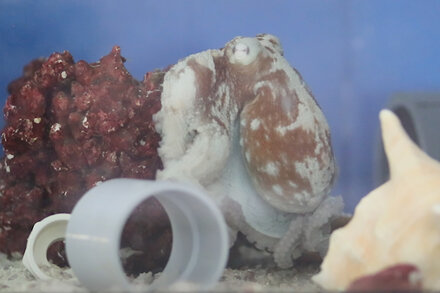

Have you ever wondered if animals dream? Well, scientists have recently made a captivating discovery that may answer this question. In a study published in The New York Times, researchers have documented behavior in a confined octopus that they claim is eerily similar to that of a human experiencing a nightmare.
The scientists, whose findings are yet to be peer-reviewed, have observed that the captive cephalopod displays signs of restlessness, altered skin coloration, and even periodic tremors. These physical manifestations, according to the research team, indicate that the octopus may be experiencing a dream-like state similar to that of humans.
What could this mean for the animal kingdom? Are these complex creatures capable of more than we ever thought possible? It’s a thought-provoking concept that reminds us how much more we have to learn about the world around us.
But it also raises some ethical questions – if animals have the capacity to experience the same nightmarish horrors that humans do, how should we treat them? Should we consider their emotional wellbeing when we keep them in captivity or subject them to scientific experimentation?
The discovery of the potential for octopuses to dream may be just the tip of the iceberg when it comes to the secrets of the animal kingdom. It’s a reminder that there is still so much we don’t know – and that the mysteries of the world around us are often more complex than we could ever imagine.